
Spine care
PLID (Disc Prolapse)
PLID (Prolapsed Lumbar Intervertebral Disc) is when part of a lumbar disc shifts and presses on a nerve. Many patients improve with medication, activity modification and physiotherapy; surgery is considered when needed.
When to seek assessment
- Pain radiating from the back into the leg (sciatica)
- Tingling, numbness or weakness in the leg
- Pain worse with coughing, sneezing or bending
What the consultation may involve
- 1Discussion of your symptoms, their duration and effect on daily life
- 2Physical and neurological examination (sensation, strength, reflexes)
- 3Review of previous reports and imaging
- 4Advice on further tests if needed
- 5Discussion of treatment options suited to you — which may include non-surgical care
Reports to bring
- MRI report and films or CD
- X-rays
- CT scan (if done)
- Previous prescriptions and current medication list
- Recent blood tests or other reports
When to seek urgent care
- Sudden problems controlling bladder or bowel
- Numbness around the back passage or inner thighs
- Rapidly worsening weakness in arms or legs
- Severe pain after an accident or fall
- Pain with fever, unexplained weight loss or a history of cancer
With these signs, do not wait for a chamber serial — go to the nearest hospital emergency department.
This is general educational information. Your diagnosis and treatment will depend on an individual clinical assessment.
Blog
Related articles
 Nerves & discs
A new ray of hope in PLID treatment
PLID চিকিৎসায় নতুন আশার আলো! Read Nerves & discs
What is a slip disc and how is it treated
আপনি কি এমন কোনো সমস্যায় কষ্ট পাচ্ছেন, যেখানে কোমরে ব্যথা শুরু হয়ে সেই ব্যথা পায়ের দিকে নেমে যাচ্ছে? সচরাচর ক্ষেত্রে স্লিপ ডিস্ক বা পিএলআইডি-এর কারণে এমনটি হয়ে… Read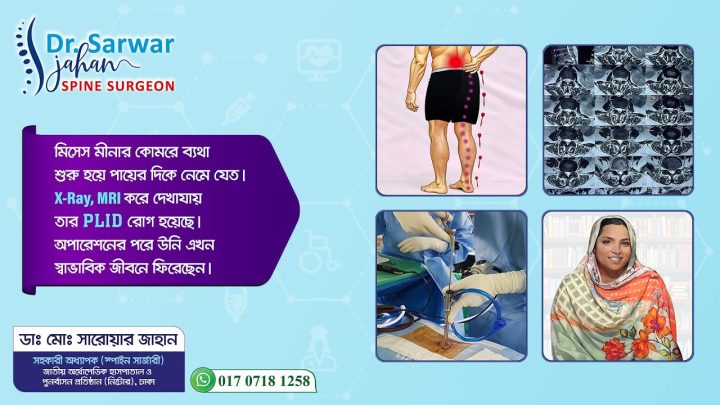 Nerves & discs
